



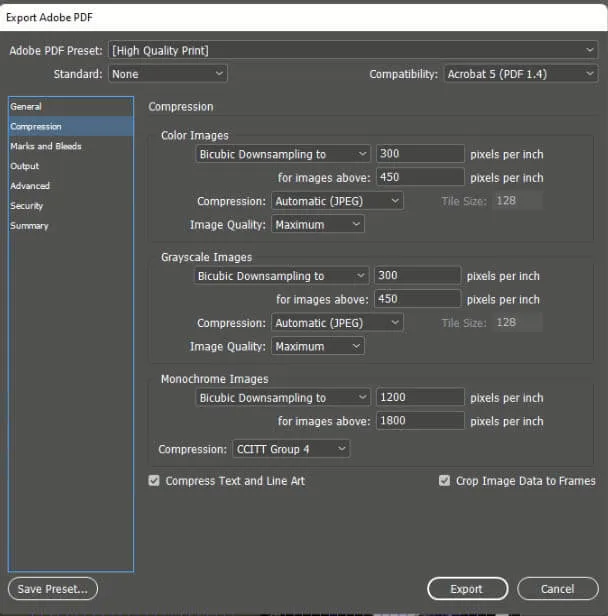
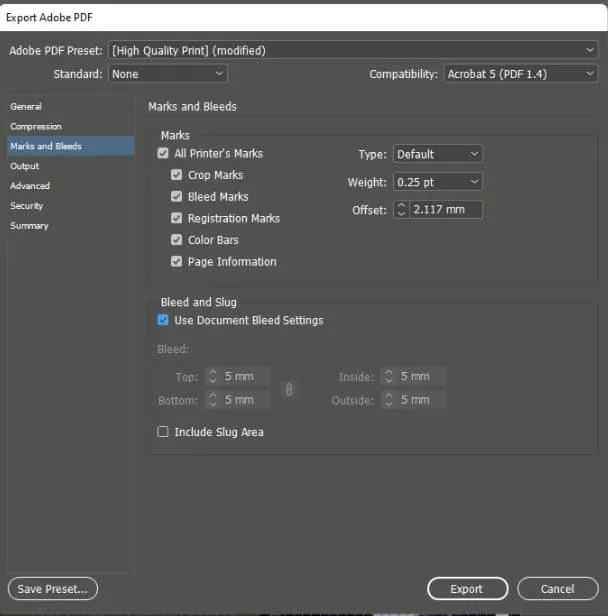
Export as PDF/X-4 where available. High Quality Print may be used when PDF/X-4 is unavailable. Include document bleed and inspect the final PDF.

← View all Printing Support Guides
Image Magic Print-Ready File Guide
Correct artwork preparation helps reduce file queries, production delays and unexpected print results. Always begin with the exact product specification and template before completing your design.
Product-specific templates and instructions take priority over the general measurements in this guide.
Do not prepare artwork based only on an assumed product size. Confirm all production details first.
Confirm width, height, unit of measurement and portrait or landscape orientation.
Confirm whether the product is printed on the front only or on both front and back.
Paper, card, sticker, synthetic sheet, banner, board and fabric may require different artwork settings.
Confirm folding, binding, lamination, die cutting, perforation, drilling, eyelets, Spot UV or hot stamping.
Confirm whether all copies use one design or whether several names, languages or artwork versions are required.
Download the template from the selected product upload page whenever one is available.
| Format | Recommended use | Important checks |
|---|---|---|
| Preferred format for most print-ready artwork | Correct page size, bleed, fonts, colour and image quality | |
| AI / EPS | Vector logos, cut paths and editable artwork | Include linked images and fonts or package the files |
| TIFF | High-quality flattened raster artwork and photographs | Final physical size, suitable PPI and correct colour mode |
| JPEG | Simple photographic or flattened single-page artwork | Avoid heavy compression and repeated resaving |
| PSD | Editable Photoshop master file | Include fonts, linked Smart Objects and all required layers |
| INDD | Editable InDesign layout | Use Package to include fonts, links and instructions |
| DOCX / PPTX / XLSX | Simple office documents only | Export to PDF and carefully check page size and formatting |
| ZIP | Several artwork files, fonts, links or supporting documents | Use clear folder and file names and include the order number |
A PDF file is not automatically print-ready. It can still contain an incorrect page size, low-resolution images, missing bleed, RGB colours, unembedded fonts or wrong page order.
The website accepts files up to 50 MB per upload. When your artwork is larger:
Do not send large artwork without an order number. Production may be delayed when the team cannot match a transferred file to the correct order.
The final physical size after cutting, folding, welding or finishing. The PDF page should normally represent this size plus the required bleed.
Extra printed artwork outside the finished edge. Extend backgrounds, photographs and patterns into this area.
The intended cutting boundary. Small cutting movement is normal during production.
Keep names, telephone numbers, logos, QR codes, borders and other important content inside this area.
Example: an A4 finished size of 210 × 297 mm becomes 216 × 303 mm when 3 mm bleed is added to every edge.
Do not add crop marks unless the product template or Image Magic specifically asks for them. Crop marks can interfere with automated artwork placement when they are unnecessarily included.
Read the Bleed, Trim and Safe Area Guide for detailed examples.
Check raster images at the final printed size. Increasing an image’s printed dimensions reduces its effective PPI.
| Application | General effective PPI target |
|---|---|
| Business cards, flyers, documents and close-view products | Approximately 250–300 PPI |
| Posters and indoor displays | Approximately 150–250 PPI |
| Roll-up bunting, backdrops and large banners | Approximately 100–150 PPI, depending on viewing distance |
| Logos, text, QR codes and line graphics | Keep as vector whenever possible |
Changing a 72 PPI label to 300 PPI without adding genuine image detail does not create a true high-resolution image.
Refer to the Print Resolution Guide for effective-PPI calculations.
CMYK is recommended for most commercial print artwork. Screen colours may change when converted from RGB to the printable colour range.
RGB files can be converted for printing, but vivid blues, greens, oranges and illuminated screen colours may become less bright.
Do not assign FOGRA39 or another profile automatically unless the selected product or production team specifically requests it.
Request a physical proof before full production when colour accuracy is critical.
JPEG is a file format, not a colour mode. A JPEG can contain RGB, grayscale or CMYK data depending on how it was created.
Read the RGB vs CMYK Colour Guide.
Embed fonts in the PDF. Convert text to outlines only when required, and always retain a separate editable master file.
Embed linked artwork or package the original design file with all image links included.
PDF/X-4 normally preserves live transparency. Inspect the exported PDF for unwanted visual changes.
Review overprint settings carefully. White objects set to overprint may disappear during production.
Use clear, high-contrast vector artwork where possible and test it at the final printed size.
Avoid extremely thin rules, especially when reversed out of dark backgrounds or used in small-format products.
Export as PDF/X-4 where available. High Quality Print may be used when PDF/X-4 is unavailable. Include document bleed and inspect the final PDF.
Keep logos and shapes as vector. Embed links or package them. Embed fonts in the PDF or outline final text when required.
Prepare raster artwork at final size and suitable PPI. Retain the editable PSD. Export PDF or TIFF; use JPEG only when appropriate.

Recommended for multipage documents. Export single pages in reader order using PDF/X-4 and Use Document Bleed Settings.
Download using PDF Print. Include bleed when the design reaches the edge. Inspect page size, image quality, fonts and colours after export.
These applications can be used for simple office documents but offer limited print-production control. Export to PDF and inspect every page.
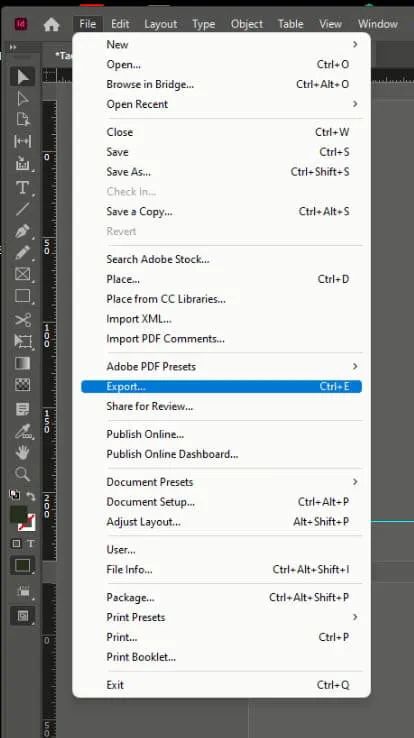
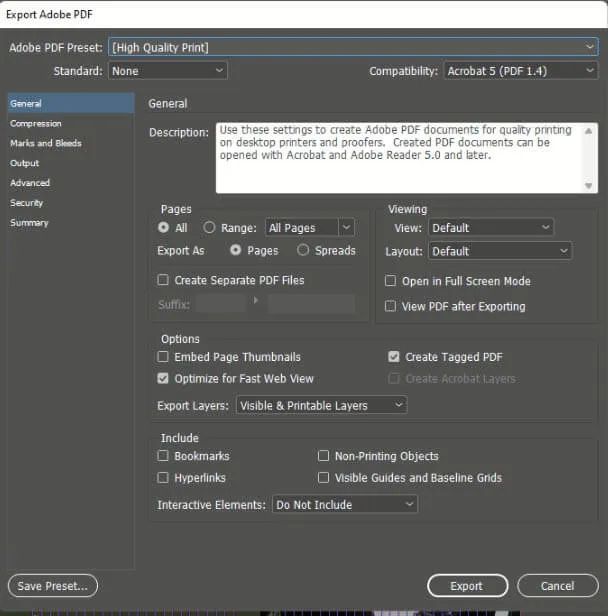
Supply one PDF in normal reading order. Page 1 should be the first visible page, and the final page should be the last visible page.
Do not arrange booklet pages into printer spreads unless the product template specifically requests an imposed layout.
Include required blank pages in the correct position. Do not assume the production team will insert them automatically.
Clearly identify the front and back. Check rotation, head direction and whether the product flips on the long or short edge.
Confirm panel widths, front cover position, reading order and whether any panel must be narrower for folding.
Supply each version as a separate clearly named file unless the ordering page provides dedicated front, back or version upload boxes.
Refer to the Folding Guide before preparing brochures or folded leaflets.
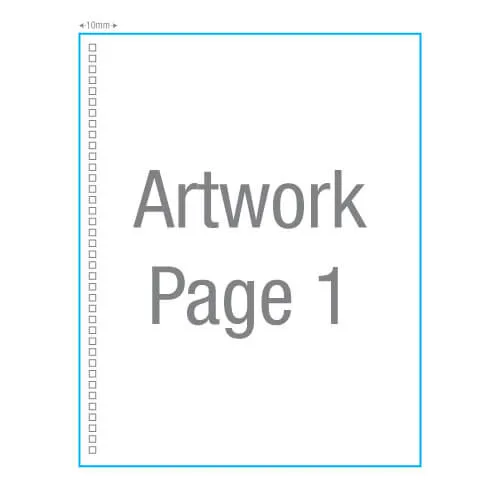
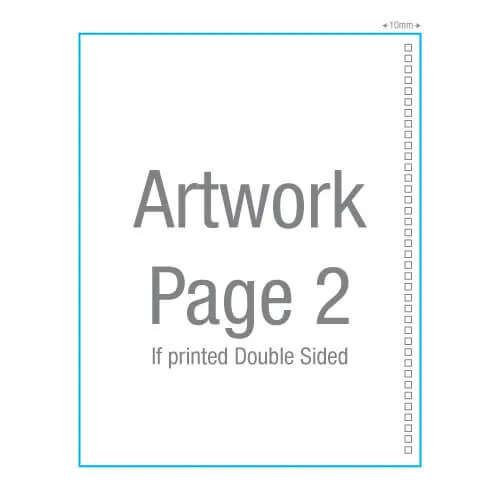
Keep important content at least 10 mm away from the binding edge, or follow the larger allowance shown in the template.
Spine width depends on the final page count and paper thickness. Confirm the calculated cover template before designing the spine.
Keep important text away from folds. Do not place Spot UV, foil, critical text or small QR codes directly across a fold.
Provide separate vector finishing-mask pages using solid black shapes and the exact same size and alignment as the CMYK artwork.
Use the product template for cut paths, holes and safety clearances. Keep critical content away from all cutting and drilling positions.
Allow for hems, eyelets, pole pockets, frames, seams, overlaps and visible-area restrictions.
For premium finishing, read the Spot UV and Hot Stamping Guide.
A basic production check may review obvious technical issues such as file opening, page size, bleed, orientation and visible image quality.
A basic file check is not a full design, spelling, grammar, data, telephone-number, price, QR-code or legal-content review. Customers remain responsible for approving all visible content before printing.
Artwork correction, rebuilding, font replacement, image editing, pagination or design changes may require additional time and charges. Production begins only after the final artwork, specification and payment are confirmed.
A print-ready PDF is preferred for most products. PDF/X-4 is recommended when your software supports it.
Normally, no. Include the required bleed but add crop marks only when the product template or production team requests them.
No. Approximately 250–300 effective PPI is recommended for close-view products. Large-format products may use less depending on viewing distance.
RGB artwork can be converted for production, but some bright screen colours may change when converted into the printable colour range.
They may be used for simple designs. Export a print-quality PDF and check size, bleed, fonts, images and page order carefully.
Select Upload Later, transfer the file through WeTransfer to [email protected] and include the order number.
No. Basic checking is not a complete design or proofreading service. Corrections may require customer approval, additional time and charges.
Send us the product name, final size, quantity, finishing requirement and artwork file. Include your order number when the order has already been placed.